Best Therapist Retreats 2027: How to Compare Before You Book
Therapists book retreats for all kinds of reasons. Some need the CE credits, some are running on fumes, and some want a week of meaningful community in a room full of people who get it (I wrote about who goes on therapist retreats if you want to find yourself on the list). Whatever your reason, the best therapist retreats for 2027 are the ones that match it, and there are seven facts worth knowing before you put down a deposit.
Best Therapist Retreats 2027: Seven Things to Compare
You've got eleven tabs open. Every one of them has a palm tree, a circle of smiling clinical professionals on yoga mats, and the word "transformative" somewhere near the top. What none of them will tell you without some digging is whether you're sharing a bathroom with a stranger, or what the CE topic actually is, or how your day flows inside the retreat.
So here's the thing about picking a continuing education retreat. The pretty parts are easy to compare, and they matter least once you're there. I've been to enough of these to know which questions decide whether the week gives you what you wanted in the first place, and it's the boring ones.
1. Retreat Topics: Clinical, Wellness, or Business Training for Therapists
Therapist training retreats on the 2027 calendar fall into three groups, and they're built for different people.
Clinical skills retreats are the biggest group. Trauma training, EMDR training, somatic work, grief, polyvagal theory, nervous system regulation, and everything from the fundamentals of IFS therapy to advanced practice. In my experience most of these are lecture style presentations, which can be a bit tedious for a neurodivergent like me.
Wellness retreats lean on yoga, meditation, and rest, with lighter teaching. They're built for personal renewal, and for giving your nervous system a week off from the daily demands of clinical work. These are awesome for unloading the weight of your work, but they might not provide what you need if you want your retreat to be a tax deduction.
Business and money retreats cover fees, practice design, and your own relationship with money. This is professional development for the part of the job nobody trained you for. This is the smallest group for helping professions, which is strange when you consider that money is in the room with nearly every client you see.
Another thing to consider is whether they teach one subject all week or a variety of topics. Sometimes we want a little sampling of several topics and sometimes we want to go deep for greater impact and to really transform our practice.
The Money Shift Retreat Topic: The Money Shift teaches one subject all week: the psychology of money. It's experiential learning, so mental health professionals combine work on their own money story with a clinical framework they can take back to clients. You get personal growth and professional development out of the same week, with practical skills and clinical confidence that travel home with you.
2. CE Accreditation: Who Approves the Hours?
"CE credits available" is the least informative sentence on any retreat page. Available to whom? A counselor, a marriage and family therapist, a psychologist, and two social workers from different states can sit in the same room and need different approvals.
Mental health professionals answer to their own boards, the same as other healthcare professionals do, and every board sets its own requirements. So ask who approves the hours and which license types are covered. A good host will name the approver, or tell you plainly that approval is still pending.
Then check it against your own board's continuing education requirements, because some states might surprise you. While plenty of states will allow you to use APA, NBCC, or ASWB education credits interchangeably for certain licenses, other states have their own rules (I'm looking at you New York).
CE Hours at The Money Shift: Up to 10 CE hours, pending approval. The approvals get named on the retreat page the moment they're confirmed in writing.
3. Daily Schedule: Classroom Versus Free Time
If you're stepping away from clinical work for a week, how much of that week do you want to spend in a chair? More CE credits sounds like better value, right? It's also more hours of sitting. Typically in a room and hopefully with air conditioning.
Do the math before you book. Take the CE hours and divide them by the number of training days, or better yet, see if they'll just show you an itinerary. You can see if your days are going to be 5 hours deep of classroom time or, my personal favorite, 2-3 hours each day so that you have plenty of time to rest, absorb the material, and actually enjoy the destination you're traveling to.
The Money Shift Daily Schedule: Training runs 9:00 to 11:45 on four mornings. Afternoons are yours for relaxing or cultural exploration, with optional included activities (i.e. "pool hours" business consulting, Garifuna cooking class, and a golden hour floating sound bath).
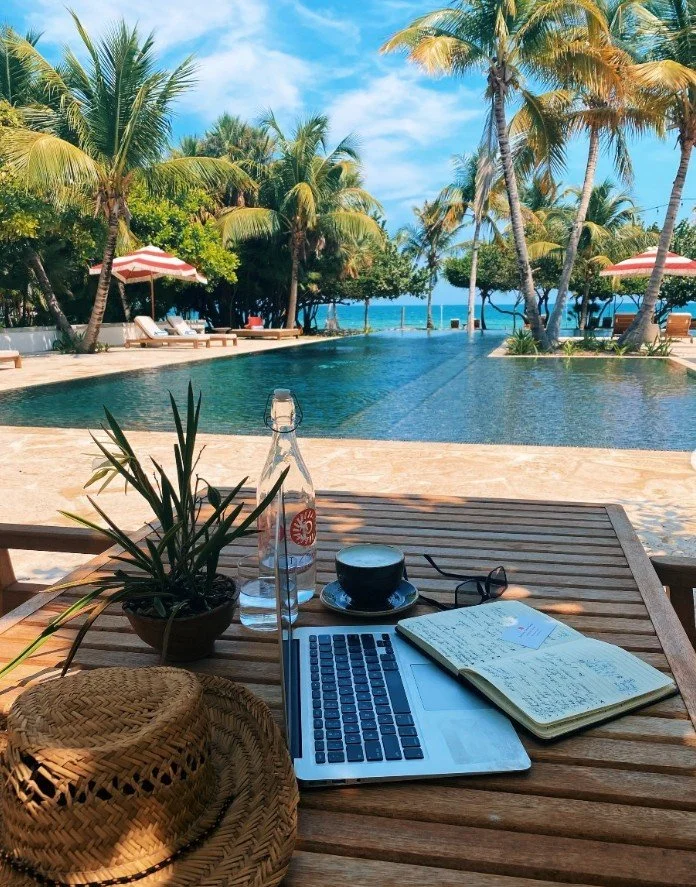
4. Accommodations: What the Base Price Buys
The "starting at" price is very often a shared room and shared bathroom, sometimes with three therapists in a room. That's fine if you're into cozying up with strangers, but it's not my particular cup of tea.
Mental health therapists manage other people's feelings for a living. We often go on therapist retreats to get away from all that (my fellow trauma therapists know what's up). After a morning of doing your own clinical work on yourself, you shouldn't have to manage a roommate's feelings too.
Ask what the room base price buys, whether it has air conditioning and wifi throughout the property, what upgrades are available, and what setting your room is going to be in. You don't want to book a room thinking it's going to be a scenic getaway only to find your view is of another building.
Rooms at The Money Shift: Every attendee has a private room at every price, with air conditioning and wifi in the rooms and in the teaching space. Villas include private plunge pools overlooking the ocean and Deluxe rooms are close to the pool.
5. Location: Retreats for Mental Health Professionals
Destination CE retreats come in three flavors. In the United States, you've got desert resorts like Sedona and serene mountain retreats you can drive to. International destination retreats in more adventurous locations, like Greece or South Africa, get you properly far from your inbox. And a PESI cruise or a destination seminar puts the classroom on the high seas or in a hotel somewhere warm.
So which is the right place? That depends on what you want from the week. Staying in the States is easier to pull off, and going abroad gets you a much bigger break from your regular life. The sweet spot can often be an international location that's easy on US travelers, where English is widely spoken, US dollars are accepted, and the time zone is close to home. (Hello, Belize and the Bahamas.)
Why The Money Shift Is in Belize: It's at Itz'ana Resort in Placencia, Belize. English is the official language, US dollars are accepted everywhere, and it's on Central time year round. It has all of the beauty of Costa Rica with the second largest barrier reef to boot.

6. Travel: Time, Logistics, and Accessibility
A second travel day is another day of sessions you didn't bill. A retreat inside the United States usually means a shorter trip and more energy left for learning. An international one asks more of you on the way there and gives you a bigger break once you land.
Get the door to door time, transfers included, and find out who's picking you up at the other end. Ask about accessibility too. Plenty of beautiful venues have stairs, sand, and uneven ground, and a host should tell you that before you book.
Getting to The Money Shift: One travel day each way. Direct flights go from major US airports to Belize City, then it's a short hop to Placencia, where the resort picks you up. You can leave your house in the morning and have your toes in the sand by the afternoon. The property has stairs and sandy terrain and isn't wheelchair accessible, so reach out first if mobility is a concern.
7. Pricing: What's Included and What Isn't
Here's what I found when I went through published 2027 prices. Shared rooms run from about $2,500 to $5,800. Private rooms run from about $3,000 to $8,500, and many of the international ones land between $5,000 and $7,000. The destination seminars that look like a steal at $725 are only charging you for the classroom, so add the hotel and food costs before you compare.
"All-inclusive" means something different on every page, so ask for the list of what you'll pay for separately. Flights weren't included anywhere I looked, and a few retreats charge extra for the CE certificate itself.
What The Money Shift Price Covers: $4,295 to $5,795, and every one of those is a private room. That covers lodging, every meal, the training, CE hours, and transfers between the Placencia airstrip and the resort, and more. You can check it out here on the retreat page.

CE Retreats for Therapists: FAQ
What trainings do therapist CE retreats offer?
Most therapist CE retreats teach clinical skills, such as trauma treatment, EMDR, IFS, somatic work, and grief. Wellness retreats focus on yoga, meditation, and rest. A smaller group teaches business and money topics for therapists in private practice.
How do I find a CE retreat that fits my license?
Start with the topic, then ask the host who approves the CE credits and which license types are covered. Boards for mental health and other healthcare professionals each publish their own rules, so confirm against yours before you register.
How far ahead should I book?
Registration for winter retreats often opens four to eight months ahead. Small groups have few rooms at each price, and booking early gives you more time on a payment plan.
So, which is the best therapist retreat for you?
The one where you'd give the same answer to all seven questions if nobody were watching. If your answer is a week on the Caribbean coast with your own room and a real look at your money story, The Money Shift is here.
